Choose a Kenai River guide on five things: the legal paperwork, real skill on this river, how they treat you and your family, a clear price and policy in writing, and a boat that is not overloaded. Every guide taking paying guests on the Kenai needs a State Parks guide permit, a state guide registration, a Coast Guard credential for a motor boat, current first aid and liability insurance. Past that, the difference is the person: how well they fish, teach and look after you. Below is how to check each one, what to ask, what to walk away from, and how our guides measure up.
- Up to 5 guestsa boat, set by river regulation
- All gear includedrods, waders, boots, bait
- $250-$300per person, Kenai River trips
- (907) 268-2925ask us anything first
The legal baseline every Kenai guide must meet
Most of the lower Kenai is inside the Kenai River Special Management Area. State Parks, Alaska Department of Fish and Game (ADF&G) and the Coast Guard each set requirements for people who guide there. You can ask to see any of them, and a good guide will not mind. Rules change, so treat this as a checklist of what to ask about, and confirm the details with the agencies.
| What to check | What it means | How to verify |
|---|---|---|
| State Parks Kenai River guide permit | Required before guiding in the special management area. It is renewed each calendar year. The boat also carries an assigned number and a Parks decal. | Ask to see the permit. Look for the number and decal on the boat. |
| ADF&G guide registration and business registration | The guide holds a current state sport fishing guide registration, and the company holds a sport fish business registration. | Ask for the guide’s registration. |
| Coast Guard credential | Carrying paying passengers on a motor boat takes a Merchant Mariner Credential (OUPV, the “six-pack”, or higher). | Ask to see the card and check the expiry date. |
| First aid and CPR | Parks requires current first aid for everyone working under the permit. | Ask who on the boat is certified. |
| Liability insurance | Parks requires it, with the State named on the policy. | Ask for the certificate of insurance. |
| Kenai River Guide Academy | A five-day course at Kenai Peninsula College in Soldotna that new guides take in their first year to get the permit. | Ask whether the guide has the certificate. |
Parks also expects a guide to stay within sight and sound of the clients, brief them on the rules and basic safety, and keep a professional manner. That includes no abuse, profanity or threatening behaviour toward guests. A guide who does not do that is breaking the permit, not just being rude.
Every Kenai Sportfishing guide holds what the river requires: the State Parks Kenai River guide permit, a U.S. Coast Guard captain’s licence and the Kenai River Guide Academy certificate, and the company carries liability insurance. We show the credentials and our insurance certificate on request. The next section is where it gets interesting, because paperwork only gets a guide on the water. It does not make the day.
What a great guide shows beyond the paperwork
Two guides can hold the same permits and give you very different days. These are the marks that matter, in the order most guests feel them.
1. They know how to fish this river. A good guide reads the water, knows where the fish are holding this week and why, and changes the plan when the water or the run changes. Ask how long they have guided the Kenai and which sections and species they fish. A guide who has fished here for years can explain what they are seeing.
2. They know their field. That means the fish, the regulations and the emergency orders as well as the technique. ADF&G changes rules in season, so the guide should know what is open today, what you can keep and how to handle a fish you release.
3. They were trained, and the company keeps training. The Guide Academy is the state’s floor. A company that wants to be good teaches its guides itself, so a new hire does not learn on your day.
4. They act like professionals. A clean boat, on time, patient, polite. Parks sets the conduct baseline, but the standard you want is higher than the baseline.
5. They are good with families and beginners. Teaching a seven-year-old to hold a rod, or a first-timer to set a hook, takes patience and good gear. Ask how they work with kids, and whether there is a minimum age. We have no minimum age and carry infant and kids’ life jackets.
6. They put your interests first. An honest guide tells you when a date is a poor fit, when the weather is not safe, when a trip is wrong for your group, and that no one can promise fish. Honest answers before you book are a good sign of honest decisions on the water.
Know the river rules, so you can judge what you are told
You do not need to memorize the regulations, but a few facts help you spot an operator who is cutting corners.
- Boat size. A motor boat in the special management area is limited to six people including the guide. That means 5 guests. A guide offering to squeeze in a sixth guest is breaking a rule that protects you.
- Horsepower. Motors on most of the lower river are limited to 50 horsepower at the propeller shaft, and they must be four-stroke or direct-injection two-stroke engines.
- Closed days and areas. Some days and stretches are drift-only or closed to fishing from a boat, and these change. A guide should know the current rules for your date.
- Kings. Kenai king salmon fishing is often restricted or closed, including catch-and-release, so no honest guide promises one. King salmon are in trouble around the world, and Alaska hasn't been spared. Most rivers across the state are closed to kings each year as the season approaches, because returns are projected to stay low, and we don't expect that to change soon. When we can fish for kings, we do; when we can't, we target sockeye and the other species in season. Check the current ADF&G emergency orders.
Power boat or drift boat?
A power boat uses a motor to run to a spot and hold position, and it covers more water. A drift boat floats with the current, is rowed or steered, and is quiet. Each is a legitimate way to fish the Kenai, and the right one depends on the species, the water and your group. Ask what your guide plans to use on your date and why. With us, the lower and middle Kenai are fished from power boats (50 horsepower, the river limit), and the upper Kenai and the Kasilof from drift boats. Our Kasilof trips are all full-day drift boat trips: Every Kasilof trip is a drift-boat float, and a good part of it runs through the Kenai National Wildlife Refuge.
What should be included, and what should cost extra
Get this in writing before you pay. On our river trips the price includes the guide, the boat, rods and reels, waders and boots, and bait and tackle. You bring your Alaska sport fishing license, food and drinks, and warm clothing. See our Alaska fishing license guide and what to bring and where to meet.
Fish processing is extra with us: $3.50 a pound for river fish, done by our shore staff (trim, portion, vacuum-seal, freeze and an airline-approved box; we can hold and ship it on request). You can also take care of your own fish. Other things to ask about across any operator: shipping, parking fees, and sales tax.
Tipping. A tip is customary in guiding and is based on how the day went. With us a gratuity is always appreciated and never required.
Cancellation, weather and deposits
Read the cancellation policy before you pay anyone. Policies range from “all sales final” to flexible refunds, and the difference matters when weather or a closure changes your trip. Ours is one policy for every trip. If you cancel more than 30 days before your trip, we refund your payment less a 20% cancellation fee. If you cancel within 30 days of your trip, the booking is non-refundable. If we cancel for weather, a mechanical problem, safety or the float plane, you choose a full refund or a new date. The full text is on our cancellation policy page.
Talk to them before you book
Online star ratings are easy to game and hard to trust. A phone call tells you more. Call and ask the questions below: a good company answers plainly, tells you what the river is doing that week, and says so when another date or another trip would suit you better.
Questions to ask any guide
| Ask | What a good answer sounds like |
|---|---|
| Are you permitted by State Parks for the Kenai? Can I see your Coast Guard credential and insurance? | A plain yes, with no hesitation. |
| Who will be my guide, and how long have they guided this river? | A name and a real history. |
| Which sections and species do you fish? | Specific, tied to my dates. |
| Power boat or drift boat on my date, and why? | A reason based on the water and the fish. |
| How many guests are in the boat? | 5 or fewer. |
| What first-aid training and safety gear do you carry? | Certified guides, a briefing at the start, life jackets for everyone. |
| What is included and what costs extra? | A clear list in writing. |
| How do you care for fish, and can I release fish? | Specific handling and a clear explanation of the rules. |
| What happens if the weather, water or run is poor? | A written policy with refund or reschedule terms. |
| How do you work with kids and beginners? Any minimum age? | Patient, with a clear age answer. |
| How are tips handled? | Appreciated, never required. |
Red flags
- No proof of permits or insuranceor "I'll get you that later"
- A guaranteed catchno honest guide can promise fish
- More than 5 guestsan overloaded boat
- No written policycash-only, or vague on refunds
- Vague about who your guide isyou should know before you book
- Big claims, no specificsa king promise when kings are closed
How our guides measure up
Here is each mark from this page, and where our guides stand. Meet them on our guide staff page.
| The mark | Our guides |
|---|---|
| Know how to fish this river | Our guides are expert anglers on the Kenai and Kasilof. |
| Experts in their field | Fish, regulations and emergency orders are part of the job. We tell you plainly what is open and what you can keep. |
| Legal baseline | Every guide holds the State Parks Kenai River guide permit, a USCG captain’s licence and the Kenai River Guide Academy certificate. We carry liability insurance. Credentials and our insurance certificate are shown on request. |
| Trained, and training the next guides | We find the right people and teach them what a successful guide needs: riding along with experienced guides, boat handling, river knowledge, rigging and fish handling, safety, guest care and the regulations. It usually takes one season. |
| First aid | Every guide is trained in first aid and CPR. |
| Professional attitude and conduct | Our guides are professional in how they treat you, and our boats are cleaned and scrubbed every day. |
| Good with families | No minimum age. We have infant and kids’ life jackets and often take children; kids 8 and up usually do best, and we are happy to have children of all ages. Parents decide what they are willing to handle. |
| Your interests first | They put your day and your safety ahead of the quick catch and the easy sale. |
| Boat size | Up to 5 guests per boat. Larger groups go out in more boats with more guides. Power boats (50 hp) on the lower and middle Kenai, drift boats on the upper Kenai and the Kasilof. |
| Included and priced up front | Rods, waders, boots and bait are included. Prices are on our charter prices page. |
| Policy and tipping | One cancellation policy for every trip. A gratuity is appreciated and never required. |
Meet the guides
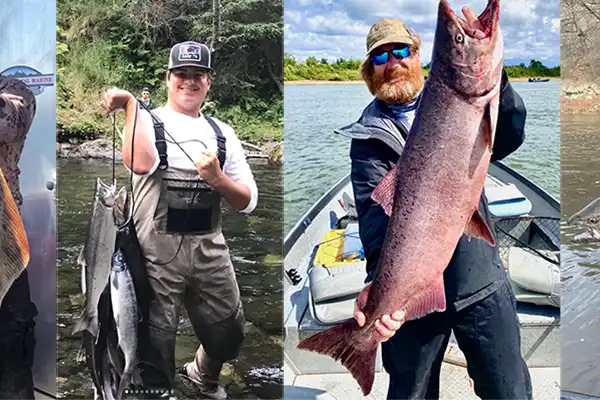
Read about each one before you book: Captain Kevin Chavira (head guide), Captain John Padgett, Captain Rob Ort, Captain Klein Muse, Captain Creig Garrett, Captain Jim Voss (owner) and Hudson Joy. The full list is on the guide staff page.
Pick a trip
- Kenai River fishing charters, full day $300 and 3/4 day $250 per person
- Kenai River sockeye and silver salmon charters
- Kenai River trout fishing
- Kasilof River king salmon, a full-day drift boat trip, $300 per person
- All prices on the charter prices page
- More answers on the FAQ
Pick a date: Kenai River trips from $250 per person
Questions about a guide, a boat or a date? Call (907) 268-2925.
Questions about choosing a Kenai River fishing guide
How do I choose a good Kenai River fishing guide?
Check the paperwork first: State Parks guide permit, ADF&G registration, Coast Guard credential, first aid and insurance. Then ask who your guide is, how long they have fished the river, what is included and what the cancellation policy is. Avoid anyone who guarantees fish or overloads the boat.
Do Kenai River guides need a license?
Yes. Guiding in the Kenai River Special Management Area takes a State Parks guide permit, and guides also need a state guide registration and, for a motor boat, a Coast Guard credential. Ask to see them.
How many people can fish on a Kenai River guide boat?
Up to 5 guests, because river regulations limit a motor boat to six people including the guide. Large groups go out across several boats and guides.
How much do you tip a Kenai River fishing guide?
Tipping is customary and based on how the day went. With us a gratuity is always appreciated and never required.
What is included in a Kenai River guided fishing trip?
On our river trips, the guide, the boat, rods and reels, waders, boots, and bait and tackle. You bring your Alaska sport fishing license, food and drinks, and warm clothing.
Are Kenai River guides good with kids?
Ours are. They are patient with kids and first-timers and take the time to teach. Call (907) 268-2925 to talk through your group's ages.
What happens if my trip is cancelled?
If you cancel more than 30 days before your trip, we refund your payment less a 20% cancellation fee. If you cancel within 30 days of your trip, the booking is non-refundable. If we cancel for weather, a mechanical problem, safety or the float plane, you choose a full refund or a new date.
Can I fish for king salmon on the Kenai River?
Only when ADF&G opens it, and in recent years it often has not. King salmon are in trouble around the world, and Alaska hasn't been spared. Most rivers across the state are closed to kings each year as the season approaches, because returns are projected to stay low, and we don't expect that to change soon. When we can fish for kings, we do; when we can't, we target sockeye and the other species in season.