
You can catch halibut from the beach on the east side of Cook Inlet, from the Kenai River mouth south to Anchor Point and the Homer Spit. Anglers cast long surf rods past the breakers with a heavy sinker and a baited circle hook, and fish around slack tide, when the current eases. Halibut move inshore from May, and the best beach fishing is usually from June to mid-July. Most beach halibut are smaller fish, often around 20 pounds. You need an Alaska sport fishing license, and sport halibut fishing is managed by federal rules. This guide covers the beaches, tides, gear, rules, ATVs on the beach, clamming and safety.
What beach halibut fishing is
Three different things go by the name “beach halibut fishing” on the Kenai Peninsula:
- Surf fishing from the beach. You stand on the beach and cast a long surf rod past the breakers, with a heavy sinker and a baited circle hook, and set the rod in a holder or sand spike. This is the true beach trip, and what this guide is about.
- Tractor-launch boat charters. Ninilchik, Deep Creek and Anchor Point have no harbor, so a tractor pushes trailered boats through the surf, and the boats run out to halibut grounds near shore. That’s a boat charter, with charter rules, not beach fishing.
- Set lines. Lines or longlines left on the beach are not legal sport gear for halibut. Don’t use them.
The beaches, from Kenai to Homer
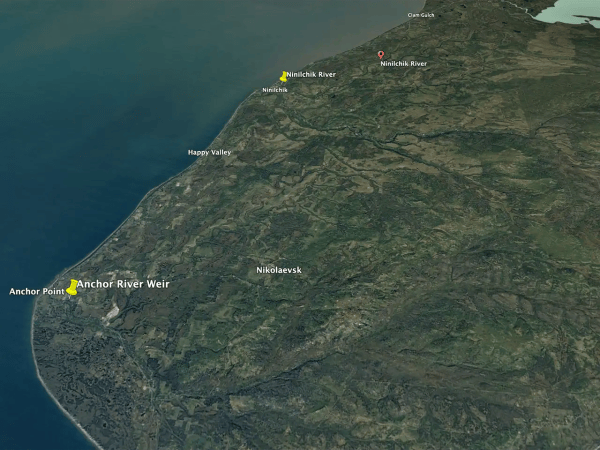
All of these beaches are off the Sterling Highway, between Kenai and Homer. Access, parking and vehicle rules differ from beach to beach, and they change, so check before you go. Our guided beach halibut trips fish the beaches between Anchor Point and Clam Gulch, with most trips starting from Whiskey Gulch.
- Kenai River mouth (North and South Beach, Kenai): city lots. Beach halibut here is a social fishery, best in June and early July.
- Kasilof beaches (north and south of the river): reached from Kalifornsky Beach Road and Cohoe Loop Road. Vehicles only on the beach and marked trails, never on the dunes.
- Clam Gulch State Recreation Area: campground, toilets and a steep, soft beach access road (four-wheel drive or ATV only).
- Ninilchik beach and harbor mouth: a day-use area by the Ninilchik State Recreation Area, with good surf halibut reports.
- Deep Creek State Recreation Area: campground and the Deep Creek tractor launch. Fish well away from the launch.
- Whiskey Gulch: a primitive beach access between Ninilchik and Anchor Point, and where most of our guided trips start.
- Anchor Point (Anchor River State Recreation Area): the end of Anchor Beach Road, with the Anchor Point tractor launch. Storm erosion has cut the parking.
- Homer Spit tip: shore halibut are possible from the end of the Spit, best at low tide, when you can cast farthest. Vehicles aren't allowed on most of the Spit.
State recreation areas charge a small day-use parking fee.
When to fish
Halibut move inshore in May, and the best beach fishing is usually from June to mid-July, when they feed close to shore after spawning and follow the hooligan runs. Fishing continues into August, and some anglers fish into early fall. Our guided beach halibut trips run about May 15 to August 31.
Cook Inlet tides, and when to cast
Cook Inlet has some of the biggest tides in the world. At NOAA’s Ninilchik tide station, the average range between high and low tide is about 16½ feet, and the biggest tides of the month run close to 19 feet. The currents are strong, so a sinker only holds the bottom when the current eases.
- Fish around slack tide. The best window is usually from about two hours before slack to two hours after, at high or low tide.
- Steep beaches and the Spit: low tide puts your cast into deeper water.
- Long, flat beaches: fish the incoming tide and move up the beach with the water.
- Read a tide table for the station nearest your beach (NOAA Ninilchik for the central beaches; Seldovia covers Kachemak Bay) before you go.
Gear and rigs that work
- Rod: a 10 to 14 foot surf rod and a reel that holds plenty of line, with a shock leader for long casts.
- Sinker: 4 to 8 ounces, a pyramid or sliding sinker that grips the bottom.
- Leader and hook: a 6 to 8 foot leader and a large circle hook (10/0 to 16/0). Circle hooks hook halibut in the corner of the mouth and make release easier.
- Bait: herring is the standard; squid and octopus stay on the hook longer.
- Holders: sand spikes, or rod holders on a truck or ATV.
- Also handy: a chair and a windbreak, pliers, a knife, gloves for skates and dogfish (watch the spines), and a cooler.
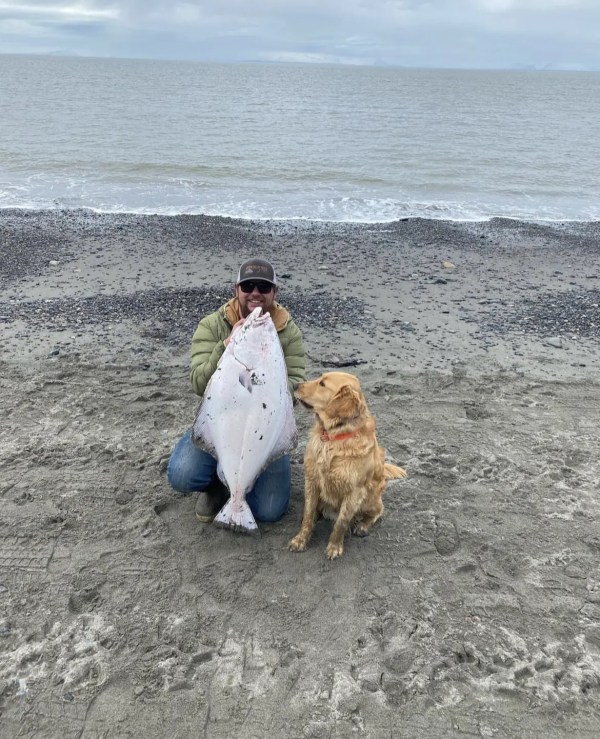
What you’ll catch: mostly smaller “chicken” halibut, often around 20 pounds, with the odd bigger fish. The same rigs catch Pacific cod, flounder and sole, skates, spiny dogfish, sculpins and Irish lords, and sometimes salmon.
The rules
- License. Alaska residents 18 and older and nonresidents 16 and older need an Alaska sport fishing license in salt water. Buy one online from the Alaska Department of Fish and Game.
- Halibut limits are federal. Sport halibut fishing is managed by NOAA Fisheries and the International Pacific Halibut Commission, not the state. Halibut limits are set each year by federal rules, so check NOAA Fisheries before you go.
- Gear. Sport halibut gear is a single line with no more than two hooks. Set lines are not sport gear.
- Conservation zones, April 1 to July 15. Near Ninilchik and Deep Creek, Stariski Creek and the Anchor River, the water within a mile of shore is closed to sport fishing from a boat. You may still fish from shore for species other than king salmon, except within 200 yards of a stream mouth. Orange markers show the boundaries.
- King salmon. Cook Inlet king salmon fishing in salt water has been restricted by emergency order. Don’t target kings from the beach unless the current rules allow it.
- Other fish. Limits for cod, flounder, sole, skates and sculpins are generous, and dogfish, lingcod and salmon have their own limits. Check the current Cook Inlet saltwater regulations and emergency orders before you go.
ATVs and trucks on the beach
ATVs and trucks are a common way to get down the long beaches, carry gear and follow the tide. The rules differ by beach:
- State recreation areas: at Clam Gulch, off-road vehicles may use only the campground loop road, the beach access road and the saltwater beach, at 5 mph on park roads. Riders under 18 must wear helmets, and drivers under 14 need direct supervision by a parent or an adult over 21.
- Clam Gulch tidelands: a state habitat area, where off-road vehicles are allowed under a general permit with conditions, including no driving below the high-water line of salmon streams.
- Kasilof: vehicles only on the beach and marked trails, never on the dunes.
- Homer: vehicles aren’t allowed on most of the Spit or on the beach east of Bishop’s Beach Park, and ATVs aren’t allowed on Homer city roads.
- Everywhere: ATVs can’t use the Sterling Highway, so trailer them to the beach. Never drive through stream mouths, stay above the incoming tide, and wear a helmet.
Is razor clamming open?
No. Razor clamming on the east side of Cook Inlet, from the Kenai River mouth to the Homer Spit, including Clam Gulch and Ninilchik, has been closed because clam numbers are far below the level needed to open it. Clam Gulch has been closed for years. The west-side beaches across the inlet are open but need a boat or a floatplane and a razor clam permit. Check with the Alaska Department of Fish and Game for any change.
Beach safety
- The incoming tide can strand vehicles and people on flat beaches and below the bluffs. Plan your way out before the flood, and never park below the high-tide line.
- Soft sand and mud on access roads and near stream mouths can bog down ATVs and trucks.
- The bluffs from Clam Gulch to Anchor Point are eroding. Stay away from their base.
- Cold water and strong currents: never wade out to cast.
- Bears come to fish carcasses at river mouths. Keep a clean beach and pack your fish away.
- Weather and wind change fast on Cook Inlet. Bring warm, waterproof layers, even in July.
On your own, or with a guide?
Beach halibut fishing is easy to try on your own if you have surf gear and a tide table. A guide saves you the gear, the bait and the guesswork about where and when: on our guided beach halibut trips we pick the beach by the tide, rig everything, teach the cast and clean your fish, with an optional ATV ride along the beach. Most trips start from Whiskey Gulch.
Cook Inlet beach halibut questions
Can you catch halibut from shore in Alaska?
Yes. On the east side of Cook Inlet, halibut come close to the beaches in early summer, and anglers catch them by casting surf rods past the breakers, from the Kenai River mouth south to Anchor Point and the Homer Spit.
How big are beach-caught halibut?
Most are smaller fish, often around 20 pounds, with the odd bigger one. For big halibut, a boat charter out of Homer reaches deeper water.
What is the best tide for beach halibut fishing?
Fish around slack tide, from about two hours before to two hours after, when the current eases and your sinker holds the bottom. On steep beaches, low tide puts your cast into deeper water; on flat beaches, fish the incoming tide.
What months are best?
Halibut move inshore in May. The best beach fishing is usually from June to mid-July, and it continues into August.
Do I need a fishing license to fish from the beach?
Yes. Alaska residents 18 and older and nonresidents 16 and older need an Alaska sport fishing license in salt water.
What are the halibut limits from shore?
Halibut limits are set each year by federal rules; we'll go over the current limits on your trip, and you can check NOAA Fisheries before you go.
Can I fish from the beach in the conservation zones?
From April 1 to July 15, the zones near Ninilchik and Deep Creek, Stariski Creek and the Anchor River are closed to fishing from a boat, but you may fish from shore for species other than king salmon, except within 200 yards of a stream mouth.
What bait works best?
Herring is the standard bait. Squid and octopus stay on the hook longer in the surf.
Can I drive an ATV on the beach?
On many beaches, yes, but the rules differ. State recreation areas allow ATVs only on set roads and the beach, Kasilof keeps vehicles off the dunes, and Homer closes most of the Spit and the beach east of Bishop's Beach Park to vehicles. Never drive through stream mouths, and wear a helmet.
Is razor clamming open at Clam Gulch or Ninilchik?
No. East-side Cook Inlet razor clamming is closed because of very low clam numbers. Check the Alaska Department of Fish and Game for any change.
Is beach fishing safe with the Cook Inlet tides?
Yes, if you plan for the tide. The water comes in fast on flat beaches, so park above the high-tide line, plan your way out before the flood, stay away from the bluffs, and never wade out to cast.
Do you offer guided beach halibut trips?
Yes. Our guided beach halibut trips are 5 hours on the beaches between Anchor Point and Clam Gulch, with most trips starting from Whiskey Gulch, $250 per person, with all gear and bait, fish cleaning and an optional ATV ride along the beach. We fish about May 15 to August 31.