
Kenai River sockeye usually peak in the last week of July. Over the last 10 counted seasons, the week that has carried the most sockeye was Jul 23–Jul 29, about 23% of the run on average. For a guided sockeye trip, late July is the time to book.
- Jul 23–Jul 29sockeye peak week
- Jul 23–Aug 3sockeye halfway point, most years
- August 1 to August 31early silvers; late run September 1 to September 30
- Two king runsKenai kings: closed most recent years; we fish them when open
- Our trip season
- Usual counting season
- Middle half of the run
- Peak week
- Halfway day
- Our guides' dates (no count)
- Our best dates
- Late run of a two-run count
- Closed most recent years
- Our Kenai River tripstripsMay 15 to September 30
- Kenai River sockeyecountPeak week Jul 23–Jul 29 (23% of the run); halfway Jul 23–Aug 3 in most years
- Kenai king, early runcountSeason May 15 to June 30; closed most recent years; we fish them when open
- Kenai king, late runcountClosed most recent years; we fish them when open
- Russian River sockeye, early runcountPeak week Jun 20–Jun 26 (30% of the run); halfway Jun 24–Jun 28 in most years
- Russian River sockeye, late runcountPeak week Aug 4–Aug 10 (22% of the run); halfway Aug 6–Aug 11 in most years
- Russian River silvers (coho)countPeak week Aug 27–Sep 2 (35% of the run); halfway Aug 24–Aug 31 in most years
- Kenai silvers, early runour datesAugust 1 to August 31
- Kenai silvers, late runour datesSeptember 1 to September 30
- Rainbow trout tripsour datesAugust 8 to September 30, catch-and-release; best mid-August to October 1
What's biting, month by month "best" marks the month with the peak week (counted runs) or the best dates (our guides)
May
- Early days: ask us
June
- Russian River sockeye (early run) best
July
- Sockeye best
- Russian River sockeye (early run)
August
- Sockeye
- Silvers
- Rainbow trout best
September
- Silvers
- Rainbow trout best
How each run builds through the summer
Each panel shows how a run usually arrives: the share of a season’s fish counted each day, averaged over the last 10 seasons. The taller the curve, the more fish are moving past the counter that week. Kenai River kings and Russian River sockeye come in two runs each, counted separately; the line marks the day the count switches.
Average share of the season's fish counted each day (7-day average), 2016–2025 seasons. Same scale on every panel.
Early run, peak Jun 9–Jun 15Late run, peak Jul 28–Aug 3
Early run, peak Jun 20–Jun 26Late run, peak Aug 4–Aug 10
Run by run
| Run | Peak week | Halfway point in most years | What it means for your trip |
|---|---|---|---|
| Kenai River sockeye | Jul 23–Jul 29 | Jul 23–Aug 3 | Late July is the heart of it. When the river is full of fish, a 3/4-day trip is usually enough to catch your limit. |
| Kenai River king, early run (to Jun 30) | Jun 9–Jun 15 | Jun 10–Jun 15 | A small run that needs protecting. See “Kings” below. |
| Kenai River king, late run (from Jul 1) | Jul 28–Aug 3 | Jul 27–Jul 29 | See “Kings” below. |
| Russian River sockeye, early run (to Jul 14) | Jun 20–Jun 26 | Jun 24–Jun 28 | Early sockeye bound for the Russian River, a Kenai River tributary. |
| Russian River sockeye, late run (from Jul 15) | Aug 4–Aug 10 | Aug 6–Aug 11 | Arrives after the main Kenai sockeye push. |
| Russian River silver (coho) | Aug 27–Sep 2 | Aug 24–Aug 31 | A sign the fall silver season is under way. |
Counts: Alaska FishTopia, from the Alaska Department of Fish and Game's preliminary daily counts. See today's numbers on Alaska FishTopia.
Silvers, trout and pinks
There’s no daily count for Kenai River silvers or rainbow trout, so these dates come from our guides:
- Silver salmon (coho). Two runs: the early run from August 1 to August 31, and the late run from September 1 to September 30.
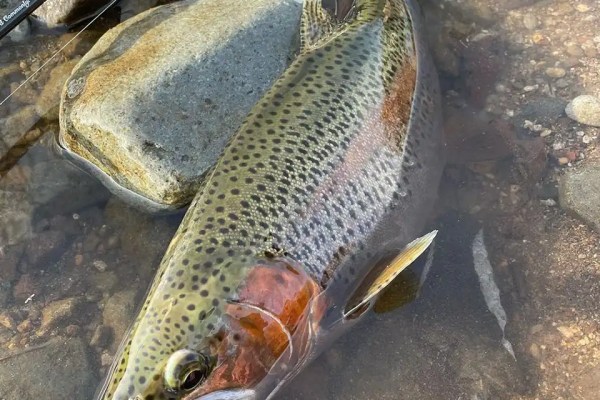
- Rainbow trout. Our trout trips run August 8 to September 30, all catch-and-release. The best trout fishing is mid-August to October 1, when the trout feed on salmon eggs.
- Pink salmon. Kenai River pinks return in even-numbered years, so 2027 is an off year.
Kings: a conservation story
King salmon are in trouble around the world, and Alaska hasn't been spared. Most rivers across the state are closed to kings each year as the season approaches, because returns are projected to stay low, and we don't expect that to change soon. When we can fish for kings, we do; when we can't, we target sockeye and the other species in season.
On the Kenai, the counts show it plainly: the late run counted 9,803 kings in 2026, against 22,133 in 2017. The early run counted 1,499 in 2026.
The numbers
| Season | Fish counted |
|---|---|
| 2026 | 9,803 |
| 2025 | 15,015 |
| 2024 | 6,630 |
| 2023 | 13,922 |
| 2022 | 13,425 |
| 2021 | 11,832 |
| 2020 | 11,499 |
| 2019 | 11,868 |
| 2018 | 16,957 |
| 2017 | 22,133 |
| 2016 | 17,447 |
| 2015 | 17,687 |
| 2014 | 10,871 |
| 2013 | 12,656 |
Plan your trip
Kenai River salmon: $300 per person for a full day (7 hours), $250 for a 3/4 day (5 hours), all gear included, May 15 to September 30.
Where we meet: the Pillars Boat Launch, about halfway between Soldotna and Kenai. From Soldotna, take the Kenai Spur Highway toward Kenai and turn left on Silver Salmon Drive. Pay the daily parking fee and walk down to the docks, where your guide and boat are waiting.
Boats and groups: river regulations allow up to 5 guests in a boat, and we have enough boats and guides to take large groups out together.

Book a Kenai River trip
More: Kenai sockeye charters · Kenai silver salmon charters · Kenai rainbow trout · charter prices · Kenai sockeye counts · Kenai king counts · Russian River sockeye counts · Kasilof River run timing
Questions about Kenai River run timing
When is the Kenai River sockeye run?
Kenai River sockeye usually peak in the last week of July. Over the last 10 counted seasons the peak week was Jul 23–Jul 29, and the run usually reached its halfway point between Jul 23 and Aug 3.
How many king salmon runs does the Kenai River have?
Two. The early run is counted through June 30 and the late run from July 1. They are counted and managed separately, and both have been weak in recent years.
Does the Russian River have one sockeye run or two?
Two. The early run is counted through July 14 and peaks in late June; the late run is counted from July 15 and peaks in early August.
When do silver salmon run on the Kenai River?
The Kenai has two silver runs: the early run from August 1 to August 31, and the late run from September 1 to September 30.
Where do Kenai River fishing trips meet?
Salmon trips meet at the Pillars Boat Launch on Silver Salmon Drive, off the Kenai Spur Highway between Soldotna and Kenai.
Where do these run timing numbers come from?
From Alaska FishTopia, which publishes the Alaska Department of Fish and Game's preliminary daily counts. The peak weeks and halfway points are worked out from the last 10 counted seasons of each run.